
Why Standard Rank Tracking Fails to Measure Real Local SEO Success
Why Standard Rank Tracking Fails to Measure Real Local SEO Success
Picture this: You are sitting in your office, staring at a monthly report from your SEO agency. It says you are “Rank #1” for your primary keyword. You feel a surge of pride – until you realize your phone hasn’t rung in two days. You pull out your smartphone, walk two blocks down the street to grab a coffee, and search for your own business. To your horror, you aren’t in the top three. In fact, you aren’t even on the first page of the Map Pack.
Welcome to the “Rank #1” illusion. For years, business owners have been sold on the idea that local SEO is a static leaderboard, much like the blue links of yesteryear. But in 2026, google business profile seo is no longer about holding a fixed position. The reality of modern search is fluid, hyper-local, and driven by the three pillars of local SEO: Proximity, Prominence, and Relevance. If your strategy is still based on a single-point ranking report, you aren’t just measuring the wrong thing – you’re flying blind. To win today, we must move beyond the vanity of “ranking” and start measuring the engagement signals that actually drive revenue.
Why Your Business Profile Gets Views but No One Actually Calls
Section 1: The Proximity Trap – Why Your Rank Changes Every 500 Feet
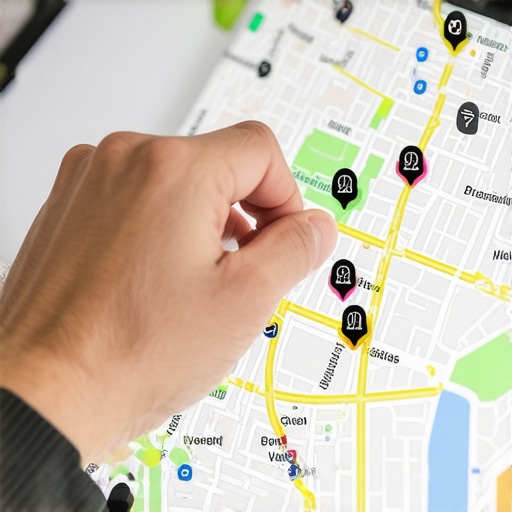
The biggest lie in local SEO is the “single point” ranking report. Traditional tools often track your keyword performance from a single data center or a fixed GPS coordinate (usually the center of your zip code). However, Google’s algorithm treats proximity as a dominant ranking signal, meaning your visibility is not a flat line – it’s a volatile “Geo-grid.”
Research into maps grids at scale reveals a startling reality: a business can be the undisputed #1 at their own front door, but drop to #10 just three blocks away. This is the “Proximity Trap.” Because Google wants to provide the most convenient solution to the user, they prioritize businesses within immediate walking or driving distance. For example, a search for “plumber” in Mesa, AZ, will yield a completely different set of Map Pack results than the same search performed just across the border in Gilbert, AZ. If you are relying on a generic report, you are seeing a tiny fraction of the truth. To truly understand your reach, you need a google maps rank tracker that visualizes your visibility across a multi-point grid, showing you exactly where your “authority” ends and your “dead zones” begin.
Section 2: The 2026 Shift – From Keywords to Engagement Signals
As we navigate the SEO landscape of 2026, the algorithm has evolved. While keywords still matter, Google now heavily weights “Engagement SEO” to determine which businesses deserve the top spots. It is no longer enough to have a keyword-optimized description; Google is looking for “Interaction Loops” that prove your business is relevant to real humans.
Google’s AI-driven local algorithm now tracks sophisticated behavioral data that traditional trackers ignore. These 2026 signals include:
- Map Zoom-In Persistence: Does the user zoom in on your specific location after seeing the results? This indicates high intent and interest.
- User-led Map Panning: If a user slides the map to find your specific storefront, Google notes that you are a destination, not just a random result.
- Profile Dwell Time (The “Profile Sticky Factor”): How long does a user spend reading your updates, scrolling through photos, or checking your “In-store” stock?
- Social Sharing: When a user taps the “Share” button to send your profile via text or WhatsApp, it sends a massive signal of authority to Google.
These “Interaction Loops” are the new currency of google business profile seo. If your profile is “ranking” but no one is sticking around to interact with it, Google will eventually replace you with a competitor who actually converts attention into action. How GMB Interaction Loops Fix Your Engagement SEO in 2026.
Section 3: Why High Rankings Don’t Equal High Leads
We’ve all seen it: the “Ghosted Call Button.” This happens when a business successfully uses a google maps ranking service to hit the top of the pack, but their lead volume remains stagnant. Why? Because ranking gets you the view, but trust signals get you the call.
In 2026, users are more discerning than ever. If your profile ranks #1 but features low-quality photos, slow response times to messages, or a lack of recent reviews, you are creating a “Passive Map Viewer.” These are users who see your listing, perhaps even tap it, but then bounce back to the map to find someone else. Data shows that a high bounce rate from your profile can actually hurt your local seo ranking signals over time. Google interprets a tap-and-bounce as a sign that your business didn’t satisfy the user’s needs. To fix this, you must optimize for the “Interaction Depth” – ensuring that every click leads to a conversion action. How to Fix the Ghosted Call Button That’s Killing Your Map Leads.
Section 4: The New Local SEO Tech Stack
If you are still using generic, all-in-one SEO platforms to manage your local presence, you are using a screwdriver to do a hammer’s job. Measuring google map pack ranking factors requires a specialized local seo software stack designed to interpret spatial data. You need to see the “heat map” of your visibility to understand how your prominence expands or contracts throughout the day.
Modern GMB ranking tools allow you to see more than just a number. They show you how “Open Now” filters affect your visibility, how your competitors are encroaching on your territory, and where your engagement is strongest. Without these insights, you are just guessing. When evaluating your strategy, ask yourself if your current tools are showing you a list or a landscape. 3 Questions That Expose Weak Local SEO Packages.
Section 5: Actionable Checklist for Real Success Measurement
Stop obsessing over a single rank. If you want to measure real success in 2026, start tracking these metrics instead:
- Call Volume from Maps: Use unique tracking numbers to see exactly how many leads come directly from the “Call” button.
- Direction Requests by Neighborhood: Which specific areas are driving people to your physical location? Focus your marketing there.
- “Open Now” Filter Appearances: Does your visibility spike when your competitors close for the day?
- Photo Views vs. Actions: Are people looking at your photos and then taking an action, or just browsing?
- Message Response Time: Google tracks how fast you reply. Aim for under 4 minutes to maintain high prominence.
3 Real Fixes for Stalled GMB Activity in 2026 [Checklist]
Conclusion: Dominating the Map in 2026
Success in local search is no longer a trophy you win once and keep on a shelf. It is a dynamic, living ecosystem of local authority and user engagement. If you continue to chase vanity ranks while ignoring the proximity of your customers and the quality of their interactions, you will be left behind by more agile competitors. Audit your profile today: look for engagement blocks, analyze your geo-grid, and stop settling for “Rank #1” on a report that doesn’t reflect the reality of the street. It’s time to stop tracking ranks and start driving revenue.