
Why Most Pest Control Companies Fail to Rank for High-Value Neighborhood Keywords
Why Most Pest Control Companies Fail to Rank for High-Value Neighborhood Keywords
I. The “Review Paradox” in Pest Control SEO
As a Marketing Specialist at Spidexx Pest Control, I frequently speak with business owners who are staring at a screen in disbelief. They have 450 five-star reviews, a pristine reputation, and a decade of experience. Yet, when they search for “termite treatment” or “spider control” in a high-value neighborhood just three miles away, they are nowhere to be found. Instead, the Google Map Pack is occupied by a competitor with 40 reviews and a half-empty profile. This is what we call the “Review Paradox.”
Many pest control founders fall into the trap of believing that reviews are the primary driver of google business profile seo. While reviews are essential for conversion, they are merely “supporting signals” in the 2026 local search landscape. In reality, relevance and geographic trust outrank raw review counts every time. If your SEO strategy is built solely on backlink acquisition and review generation, you are missing the core mechanics that Google uses to determine who truly “owns” a neighborhood. The frustration of being invisible despite being the “better” company is real, but it is a technical problem with a technical solution.
To dominate the local map pack, you must understand that Google isn’t just looking for the most popular business; it is looking for the most contextually relevant business for a specific micro-location. If your profile is buried, it’s likely because your digital footprint is sending conflicting signals about where you operate and what you specialize in. You can read more about this in our deep dive on Why Pest Control Profiles Get Buried Despite Having Better Reviews Than Competitors.
II. The “Service Area Dilution” Trap
One of the most common mistakes I see in the pest control industry is the “Service Area Dilution” trap. In an effort to cast the widest net possible, owners will log into their dashboard and claim 15, 20, or even 30 different cities and townships. While this feels like a growth strategy, it is actually a recipe for invisibility. Google’s proximity and relevance algorithms are designed to provide the most localized result possible. When you tell Google you serve a 50-mile radius across three counties, you dilute your authority in your own backyard.
Google prioritizes “Proximity” (how close you are to the searcher) and “Prominence” (how well-known you are in that specific area). By claiming too many areas, you confuse the algorithm. Instead of seeing you as the “Ant Control Expert in Highland Park,” Google sees you as a generic service provider with no specific anchor. This lack of geographic focus makes your business look like a “jack of all trades, master of none” to the AI crawlers. To rank google business profile listings effectively, you must tighten your focus. A single location cannot realistically dominate 30 cities; Google knows this, and it will suppress your profile in favor of a competitor who focuses on a tighter, 5-10 mile radius.
If you find that your rankings drop off sharply the moment you leave your office’s zip code, you are likely suffering from this dilution. You need to rank higher on google maps by signaling high density in a few key areas rather than low density across a massive region. For a step-by-step guide on fixing this, check out our resource on how to Fix the Service Area Page Errors Keeping You Invisible in Neighboring Towns.
IV. The 2026 Shift: Engagement Signals as the New Ranking King
The most significant shift in local search for 2026 is the move away from static signals toward “Interaction Depth.” For years, we focused on clicks. Today, a click is just the beginning. Google is now measuring how users interact with the map interface itself to determine which businesses deserve the top spot. This is why a google maps ranking service or a gmb ranking service that focuses only on citations is outdated.
There are three “Engagement Pillars” that now dictate your ranking:
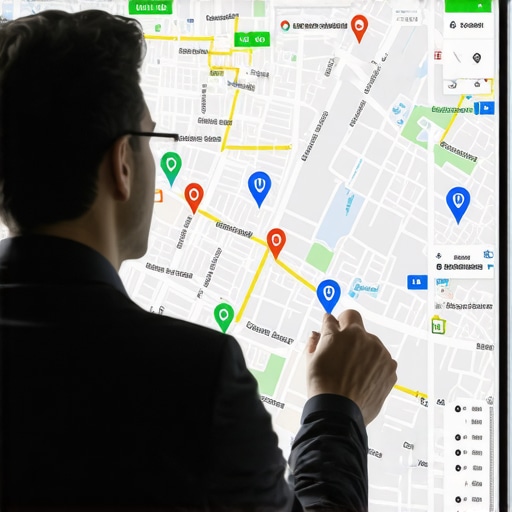
- Map Panning and Zooming: If a user searches for pest control, sees your pin, and then pans the map to see exactly where your office is or zooms in to see your proximity to their street, Google interprets this as high interest. This “persistence” in the map interface is a massive ranking signal.
- Address Copying: When a user highlights and copies your business address, it is a stronger signal than a simple “Get Directions” click. It suggests the user is taking your information into another app or a text message, indicating a high level of intent and trust.
- Profile Dwell Time: How long does a user spend on your GBP? Are they reading your Q&A? Are they scrolling through your photos of “Rodent Exclusion in [Neighborhood]”? The longer the dwell time, the higher your authority.
To capitalize on this, you must give users a reason to stay on your profile. This is why we emphasize Why User-led Map Area Searches Impact 2026 Ranking Signals. If your profile is a ghost town with no updates, users bounce immediately, signaling to Google that you aren’t relevant. Furthermore, Why Profile Dwell Time Now Outranks Simple Click Volume explains how to structure your posts to keep users engaged. Finally, understanding Why Map Pin Drags Are the Secret Move That Boosts Local Authority can help you optimize your physical location signals for the 2026 algorithm.
V. Technical Foundation: Schema, Citations, and Niche Authority
While engagement is the “new king,” the technical foundation remains the “kingmaker.” Many pest control companies waste money on “100 directory listings” packages. In the modern era, 100 generic citations from low-quality sites are worth less than 10 high-quality, niche-specific citations. Google values relevance over volume. Being listed on a local neighborhood association site or a pest control industry directory carries far more weight than a random bookmarking site.
Furthermore, your LocalBusiness Schema must be flawless. This includes your exact Geo-coordinates (Latitude and Longitude) to the sixth decimal point. This level of precision helps Google place your “Map Pin” with absolute confidence. Without this, your local seo services are essentially guessing. Using a google business profile audit tool is the first step in identifying where your technical data is failing you.
Niche authority also comes from your “Service-Area Business” (SAB) settings. If you don’t have a physical storefront where customers are greeted, your “hidden” address must still be verified and consistent across the web. Discrepancies in your NAP (Name, Address, Phone Number) across niche sites will trigger a “lack of confidence” flag in the algorithm. To learn more about this, see Why 10 Niche Citations Beat 100 Generic Directory Listings. You should also leverage local seo ranking tools to monitor how these technical changes impact your visibility over time.
VI. The Action Plan: Auditing Your Way to the Top 3
If you are ready to stop being invisible in high-value neighborhoods, you need a systematic approach. Don’t just “post more photos” – audit your profile for the signals that actually matter in 2026. Here is your immediate action plan:
- Tighten Your Service Area: Remove any city or zip code where you haven’t performed a job in the last 90 days. Focus on your “Power Radius.”
- Neighborhood-Specific Photos: Upload photos of your trucks or technicians in front of recognizable neighborhood landmarks or street signs.
- Update Your Q&A: Seed your own Q&A section with hyper-local questions. “Do you handle the specific type of carpenter ants found in [Neighborhood]?”
- Implement Advanced Schema: Ensure your website uses Geo-coordinates and
areaServedschema to mirror your GBP settings.
By focusing on these high-impact moves, you can bypass competitors who are still stuck in 2020. For a deeper dive, use The 15-Minute Google Maps Audit That Finds Hidden Ranking Blocks to identify the specific issues holding your profile back.
VII. Conclusion & CTA
The “Review Paradox” is only a paradox if you don’t understand how the 2026 algorithm works. In the pest control industry, visibility is the difference between a thriving route and a struggling business. Stop chasing generic metrics and start focusing on the engagement signals and hyperlocal relevance that Google actually rewards. If you want to see exactly where your profile stands and how to bridge the gap to the top 3, visit the website of SEO Viper and use their google maps ranking service to diagnose your profile today. Don’t let your competitors own the neighborhoods you should be protecting.