
Why Patients Scroll Past Your Dental Practice Even with 5-Star Reviews
Why Patients Scroll Past Your Dental Practice Even with 5-Star Reviews
It is the ultimate frustration for a modern dental practice owner: you have invested years into building a stellar reputation, your patient satisfaction scores are through the roof, and your Google Business Profile boasts hundreds of genuine 5-star reviews. Yet, when you look at your appointment book, the “new patient” slots remain stubbornly empty. Meanwhile, the clinic three blocks away – with half your review count and a lower average rating – is consistently booked out weeks in advance. This is the “5-Star Paradox.”
In the competitive world of local SEO for dentists, many practitioners fall into the trap of believing that reviews are the primary driver of visibility. While reviews are essential for conversion, they are often secondary for ranking. If your practice isn’t appearing in the coveted “Local 3-Pack,” those 5-star reviews are effectively invisible. Patients aren’t ignoring your quality; they simply aren’t seeing you. To stop the scroll and start winning patients, you must look beyond the stars and master the technical nuances of the local map pack.
The Psychology of the Local Map Pack: Why Reviews Aren’t Enough
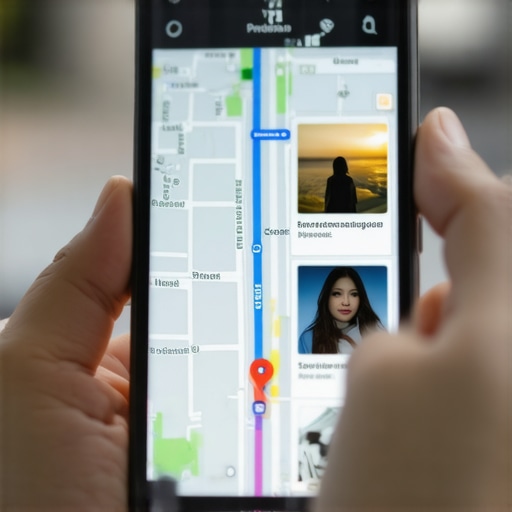
To understand why patients scroll past your practice, we must first understand how they search. The “90% Rule” is a cornerstone of digital consumer behavior: 90% of people read reviews before visiting a business, but – and this is the critical distinction – they rarely scroll past the top three results on Google Maps. If you are ranked #4 or #5, you are statistically non-existent to the vast majority of local searchers.
Google’s algorithm for the Local Pack is built on three pillars: Proximity, Relevance, and Prominence. While your 5-star reviews contribute to “Prominence,” they do little to solve issues with “Proximity” or “Relevance.” Furthermore, patients suffer from what we call the “Clinical Skill Gap.” Because a layperson cannot accurately judge the technical precision of a root canal or the longevity of a crown via a search result, they use proxies for quality. In the digital realm, those proxies are “Review Volume” and “Proximity.” However, Google uses google business profile seo to decide which “high-quality” businesses are actually relevant to the user’s specific intent.
Most clicks go directly to the Local 3-Pack. If your practice is buried on page two, or even just outside the top three, you are losing the battle before it begins. You might be the best dentist in the city, but if your google business profile seo isn’t optimized to signal relevance and authority to Google’s crawlers, your clinical excellence remains a well-kept secret. To bridge this gap, you must transition from a “reputation-first” strategy to a “visibility-first” strategy. You can learn more about this by comparing your situation to other industries, such as why legal practice profiles get buried despite having 5-star reviews.
Technical “Invisible” Blocks Killing Your Dental Ranking
If your reviews are great but your ranking is stagnant, the culprit is likely technical. There are “invisible” blocks within your profile that tell Google you aren’t the best fit for a specific search query. One of the most common errors is the mismanagement of Primary vs. Secondary Categories. If your primary category is set to “Dental Clinic” but the user is searching for a “Cosmetic Dentist,” Google may prioritize a competitor who has correctly categorized their specialty. You must align your categories with the high-value services you want to attract.
Another silent killer is NAP (Name, Address, Phone) inconsistency. If your practice is listed as “Smith Family Dental” on Google but “Smith Dental Associates” on Yelp or your local chamber of commerce site, Google’s confidence in your location data drops. This lack of trust results in a lower ranking. Furthermore, many dentists rely on “Generic Citations” (like Yellow Pages) while ignoring “Niche Citations” (like Healthgrades, Zocdoc, or local dental associations). Google views niche-specific mentions as a stronger signal of industry authority.
We also need to address the “Shadowban” reality. Have you ever had a patient swear they left a 5-star review, but it never appeared on your profile? Google’s filtering algorithm has become incredibly aggressive. If your profile lacks technical authority – meaning your Google Maps ranking checklist is incomplete or your website lacks proper Schema markup – Google is more likely to flag legitimate reviews as “spam.” This happens because the algorithm can’t verify the relationship between the reviewer and the business. To fix this, you need a robust google business profile optimization strategy that builds a “moat” of technical trust around your practice.
The “Engagement Gap”: How Google Measures Patient Interest
In 2025 and heading into 2026, static information is no longer enough to rank higher on google maps. Google has shifted toward “Engagement Signals.” They aren’t just looking at what you say about yourself; they are watching how users interact with your profile. This is known as the “Engagement Gap.” If two practices have similar reviews and proximity, Google will rank the one that users “interact” with more frequently.
Consider Photo Tactics. Google tracks how many times users swipe through your photos and whether they zoom in on specific details. A profile with 50 high-quality, original photos of the office, the technology (like CEREC machines or digital X-rays), and the staff will vastly outperform a profile with five stock photos of smiling people. Each swipe and zoom is a “micro-conversion” that tells Google your profile is providing value. In fact, why map users zooming in on your photos is the secret signal you’re ignoring is a concept every dental marketer needs to master.
Then there is Dwell Time. This is the amount of time a user spends looking at your profile before clicking away or booking. You can increase dwell time by filling out your Q&A section with detailed, helpful answers and providing exhaustive service descriptions. Google also monitors “Map Panning” and “Want to Go” list saves. If a user searches for a dentist, finds your profile, and saves it to a list, that is a massive ranking signal for future searches in your area. To maximize these signals, you must treat your Google Business Profile as a dynamic social media platform rather than a static directory listing.
Content Strategy for Dentists: Turning Views into Appointments
Once you have solved the visibility problem, you must address the conversion problem. Many dentists use Google Business Profile Posts, but they make the four common mistakes: using generic stock photos, writing boring captions, failing to include a Call to Action (CTA), and ignoring local keywords. To stand out, your posts should feature real-life transformations, “behind-the-scenes” looks at your sterilization tech, and community involvement.
A highly effective but underutilized tactic is the use of Image Captions. When you upload a photo of a successful Invisalign case, don’t just leave it blank. Use geo-targeted keywords in the caption, such as “Stunning Invisalign results for our patient in [City Name].” This helps Google associate your specific services with specific geographic locations. As we discuss in our guide on how specific image captions increase your map click-through rate, these small details are what separate the top 3 from the rest of the pack.
Furthermore, you should utilize Service Area Pages on your website that link directly back to your Google Business Profile. If you want to attract patients from a neighboring town where you don’t have a physical office, you need content that signals to Google that you serve that area. This expands your “ranking radius,” allowing you to show up in the Local Pack for users who aren’t standing right next to your front door. This holistic approach ensures that you are not just getting “views,” but the *right* views that lead to high-value appointments.
Future-Proofing Your Practice: Local SEO Trends for 2026
The landscape of local search is evolving rapidly with the integration of AI-driven search and “Query Refinement.” In the near future, Google won’t just look for “Dentist near me.” It will use AI to understand complex queries like “Best Invisalign dentist near me for adults with sensitive teeth.” This information will be pulled from your reviews, your posts, and even the depth of your menu interaction.
To stay ahead, you need to focus on Technical Authority. This includes implementing advanced Schema markup on your website so Google’s AI can easily digest your office hours, insurance providers, and specific dental procedures. You should also look into a professional google maps ranking service to monitor how your practice performs across different zip codes and search terms. The goal is to move from being a “general” result to a “specific” solution for the patient’s exact need.
In 2026, “User-Added Location Tags” will likely become a stronger signal. When a patient checks in at your office or adds a photo with a location tag, it reinforces your proximity and relevance. Encouraging this type of organic engagement will be the key to maintaining a top-3 position. If you find yourself struggling to keep up, it might be time to investigate the 3-step profile tweak to break into the Google Maps Top 3 or analyze why your business profile is stuck on page two while competitors thrive.
Conclusion: Moving from Invisible to In-Demand
Reviews are the “closer,” but SEO is the “opener.” You can have the most glowing testimonials in the world, but if your review response strategy is flawed or your technical SEO is non-existent, you will remain invisible to the patients who need you most. Ranking in the Local 3-Pack requires a delicate balance of proximity signals, technical accuracy, and consistent user engagement.
Stop letting competitors with inferior clinical skills take your patients simply because they have a better grasp of the algorithm. It is time to move beyond the 5-star myth and embrace a comprehensive local SEO strategy. Audit your profile today: check your categories, update your photos, and start engaging with your local community through your profile. For those looking to track these hidden metrics and gain a competitive edge, resources like SEO Viper Tools provide the data-driven insights necessary to dominate your local market. Don’t just be the best dentist in town – be the most visible one.