
Why Legal Practice Profiles Get Buried Despite Having 5-Star Reviews
Why Legal Practice Profiles Get Buried Despite Having 5-Star Reviews
You’ve done everything right. Your personal injury firm has 150 five-star reviews, a meticulously filled-out profile, and professional photography that makes your office look like a scene from Suits. Yet, when you search for “car accident lawyer near me,” you’re nowhere to be found. Instead, the Google Map Pack is dominated by a “ghost firm” with eight mediocre reviews and a grainy photo of a lobby. It feels like a glitch in the matrix, but I can assure you, it’s not.
I’m Kristin Jane Smith, Director of Marketing & Design at Lawyer.com. Over the years, I’ve seen thousands of law firms fall into the “Review Paradox.” They believe that reputation is the primary currency of Google’s local algorithm. While reviews are vital for converting a lead once they find you, they are no longer the primary engine that gets you found. The 2026 local search landscape has shifted dramatically. Google has moved from a “reputation-first” model to an “engagement-and-proximity-first” model. If you want to rank google business profile listings in high-competition legal niches, you have to stop looking at your star rating and start looking at your google business profile seo strategy through the lens of invisible signals.
Section 1: The Death of the Review Monopoly
For nearly a decade, the advice was simple: get more reviews than the guy across the street, and you’ll outrank him. That era is officially dead. While reviews remain a foundational element of local seo for lawyers, they have lost their monopoly over the ranking algorithm. The catalyst for this shift was the December 2021 “Vicinity Update,” which introduced what we now call the “Proximity Squeeze.”
The Proximity Squeeze is Google’s aggressive narrowing of the search radius. In the past, a powerhouse law firm in the suburbs could rank for “divorce attorney” searches in the city center based solely on their massive review count and brand authority. Today, Google favors the firm located 0.5 miles from the searcher with a 3.8-star rating over the 5.0-star firm located 5 miles away. Google’s primary goal is “hyper-relevance” and convenience for the user. They have decided that, for most local intents, being close is more important than being the “best” in the traditional sense.
This creates a massive hurdle for legal practices. Most law firms are clustered in “Lawyer Rows” or downtown districts, but their clients are searching from residential neighborhoods. If your google maps ranking factors are relying solely on reviews, you are essentially bringing a knife to a gunfight. You are fighting against a geographic bias that reviews cannot overcome on their own. To break through this squeeze, you must transition from a passive reputation strategy to an active engagement strategy.
Section 2: The Three Pillars of Local SEO
To understand why your profile is buried, we must deconstruct the three pillars that Google uses to determine local rankings: Proximity, Relevance, and Prominence. Understanding these is the first step toward a successful google business profile seo overhaul.
Proximity: The Squeeze and the Downtown Bias
As mentioned, proximity is the heaviest weight in the current algorithm. Google looks at the distance between the searcher and your physical office. However, it’s not just about linear distance; it’s about “perceived convenience.” If your office is in a high-traffic downtown area, Google may give you a slight boost within that specific corridor, but your visibility will drop off a cliff the moment a user crosses a major highway or enters a different zip code. This is why “satellite offices” (when done legitimately) became so popular, though Google is now cracking down on “virtual” locations that lack a physical presence.
Relevance: More Than Just Categories
Relevance is how well your business profile matches what the user is looking for. Most lawyers select “Law Firm” or “Attorney” and stop there. To rank higher on google maps, you need to go deeper. Relevance is built through category selection, but also through “unstructured citations.” These are mentions of your firm on legal blogs, news sites, or local bar association pages that don’t necessarily follow a standard directory format. If the web “talks” about you in the context of “medical malpractice,” Google builds a stronger relevance bond between your profile and those specific keywords.
Prominence: The Digital Footprint
Prominence is a measure of how well-known your firm is offline and across the broader web. This is where your backlinks, press releases, and overall brand mentions come into play. If your firm is frequently mentioned in local news or has a high volume of branded searches (people specifically typing your firm’s name into Google), your prominence score skyrockets. This can sometimes act as a counterweight to the proximity squeeze, allowing a very prominent firm to rank slightly outside its immediate geographic radius.
Section 3: The 2026 Engagement Signal Shift
If proximity is the hardest pillar to influence, and relevance is the most tedious, then Engagement is the most opportunistic. This is the core of the “Invisible Reason” why your competitors are winning. Google is no longer just looking at what your profile says; it is looking at how users behave when they interact with it. We call this “Engagement SEO.”
Profile Dwell Time
Google tracks how long a user stays on your Business Profile. If a user clicks your profile, reads three reviews, looks at five photos, and stays for four minutes, that is a massive signal to Google that your profile is valuable. Conversely, if they click and immediately bounce back to the search results, your “relevance” score takes a hit. This is why Profile Dwell Time is the secret 2026 ranking signal that most lawyers are completely ignoring. High dwell time proves you are a high-quality result.
Map Interactions: Panning, Zooming, and Drags
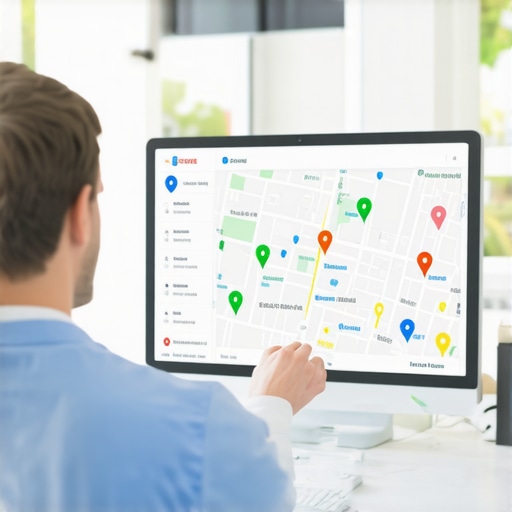
Modern local SEO isn’t just about the click; it’s about the “Map Interaction.” When a user searches for a lawyer and then pans the map to find your specific office, or zooms in to see your building via Street View, Google registers this as high-intent engagement. Specifically, map pin drags are the secret move that boosts local authority. When users interact with the map interface to find you, it tells the algorithm that your location is a destination, not just a random search result.
Secondary Actions and Intent Signals
We often focus on “Calls” and “Website Clicks,” but Google tracks much more subtle data points. For example, users copying your business address is a stronger signal than a click because it implies they are putting your address into a different GPS app or sharing it with someone. Other vital signals include:
- Map Area Exploration: Users looking at the surroundings of your office.
- “Want to Go” Saves: Users bookmarking your firm for later.
- Photo Expanders: Users clicking to see the full version of your office or team photos.
These “micro-engagements” create an interaction loop that signals to Google your profile is more relevant than a competitor who might have more reviews but zero user interaction.
Section 4: Why Your Competitors are Winning
If you are being outranked by a firm with fewer reviews, it’s likely because they have triggered these “Interaction Loops” more effectively than you. It’s a phenomenon we see across many industries. For instance, you can see why pest control profiles get buried despite having better reviews than competitors for very similar reasons. It often comes down to “Hyperlocal SEO” and avoiding the technical pitfalls that kill visibility.
One of the biggest silent killers is citation inconsistency. If your firm’s name, address, or phone number (NAP) is slightly different across the web, Google loses trust in your location data. You should review the 5 common citation mistakes killing your map visibility to ensure your foundation is solid. Even a small discrepancy, like “Suite 500” versus “#500,” can be enough to dampen your prominence in a hyper-competitive legal market.
Furthermore, your competitors might be utilizing Google Posts more effectively. While Google has stated that Posts aren’t a direct ranking factor, they are a massive engagement factor. A compelling post about a recent case win or a community event encourages users to click “Learn More,” which increases dwell time and signals to Google that your profile is active and relevant.
Section 5: The Legal Practice Audit & Fix
If you’re ready to stop being buried and start reclaiming your spot in the Map Pack, you need a systematic approach. You cannot just “wait” for more reviews to fix the problem. Here is a checklist for auditing and fixing your legal practice profile:
- Audit Your Technical Foundation: Use a local seo tools suite to check for NAP consistency across all major legal directories (Avvo, FindLaw, Justia).
- Optimize for Dwell Time: Upload at least 20-30 high-quality photos. Include the exterior, interior, your team in action, and even photos of the local landmarks near your office to anchor your proximity.
- Leverage Hyper-Specific Categories: Don’t just use “Lawyer.” If you do personal injury, ensure “Personal Injury Attorney” is your primary category. Use secondary categories for every sub-niche you actually practice.
- Trigger Engagement: Encourage clients not just to leave a review, but to upload a photo of the office or mention a specific service in their review. This increases the “Relevance” of the review itself.
- Professional Intervention: If you are in a major metro area like New York, LA, or Chicago, the organic signals might not be enough to overcome the competition. In these cases, using a google maps ranking service can help simulate the necessary engagement signals to jumpstart your profile’s authority.
Remember, your Google Business Profile is not a static digital billboard; it is a dynamic interaction hub. Every time a user pans the map to find you or spends time reading your FAQs, you are gaining ground on your competitors.
Winning the Engagement Bet
The “Review Paradox” is frustrating, but it’s also an opportunity. Most of your competitors are still operating on the 2018 playbook, obsessively chasing five-star ratings while ignoring the invisible signals that actually drive the 2026 algorithm. Reviews are simply the “entry fee” to get into the game. They prove you are credible. But engagement – dwell time, map interactions, and proximity relevance – is the “winning bet” that puts you in the top three.
Stop wondering why the “ghost firm” is outranking you. They aren’t luckier; they are simply sending the signals Google currently values most. It’s time to move beyond the stars and start dominating the map. If you’re ready to take your practice to the next level, explore our engagement tools or contact our team for a deep-dive strategy session into your firm’s local footprint.