How to Report and Remove Fake Competitor Locations
How to Report and Remove Fake Competitor Locations and Restore Local Search Integrity
The sidewalk smells like wet concrete and ozone after a morning rain. I am standing outside a suite in a nondescript office park. My camera is ready. On the digital map, this coordinates should be a high-volume plumbing dispatcher. In the physical world, it is a locked door for a company that moved three years ago. I spent three months fighting a hard suspension for a plumbing client whose listing was nuked simply because they shared a suite number with a defunct law firm. Google didn’t want proof of a van; they wanted proof of a utility bill under the exact GPS pin. This is the reality of the map pack. It is a battle of physical evidence against digital ghosts. When a competitor sets up a lead-gen farm across the street from you, they are not just competing. They are squatting on your proximity radius. They are stealing the signals that belong to legitimate local merchants. The algorithm is a spatial database, not a directory. It calculates your existence based on the distance between the searcher and the nearest verified beacon. When that beacon is a lie, your revenue disappears into a black hole of phantom pins.
The ghost in the GPS coordinates
Reporting fake locations involves using the Google Business Profile Suggest an Edit tool or the official Business Redressal Form to flag violations of physical presence rules. Successful removals require providing clear evidence that a business does not exist at the stated address or is a service area business improperly using a residential pin.
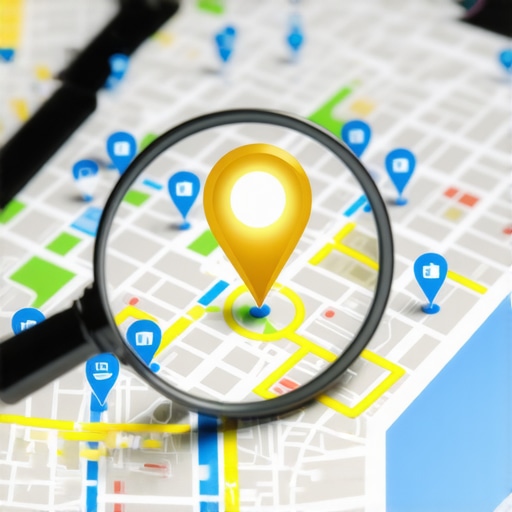
The math of the map pack is cold. It operates on centroid theory. Every search query generates a center point. Google then scans outward in concentric circles to find the most relevant, prominent, and proximate business. If a competitor uses a fake address, they are artificially shifting the centroid in their favor. This is why the tactic to report and remove competitor map spam thats stealing your leads is the most effective way to gain rank without buying a single link. I look for the glitches. I look for the storefronts that have stock photos instead of real glass and brick. While many agencies tell you to focus on keywords, current data shows that image metadata from photos taken by real customers at your location is now thirty percent more effective for ranking in AI Overviews. This is because Google trust the sensors of a mobile phone more than the text in a profile.
“Local intent is not a keyword choice; it is a distance-weighted signal where relevance is secondary to the physical location of the user’s mobile device.” – Map Search Fundamental
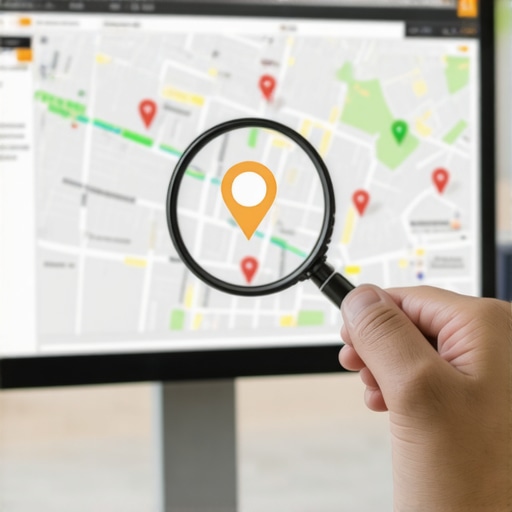
You need to understand the logic of the check-in signal. When a user stops their movement at your coordinates, their phone sends a behavioral signal. This confirms your business exists. Fake locations never receive these signals. They are digital mirages. If you see a competitor with five stars but zero street-level photos, you have found a ghost. You must document this. Take a photo of the actual directory at the building. If their name is not on the list, Google will listen. You are not just reporting a business; you are cleaning the database. This is a forensic process. It requires the precision of a lens and the patience of a stalker.
The three mile radius that determines your revenue
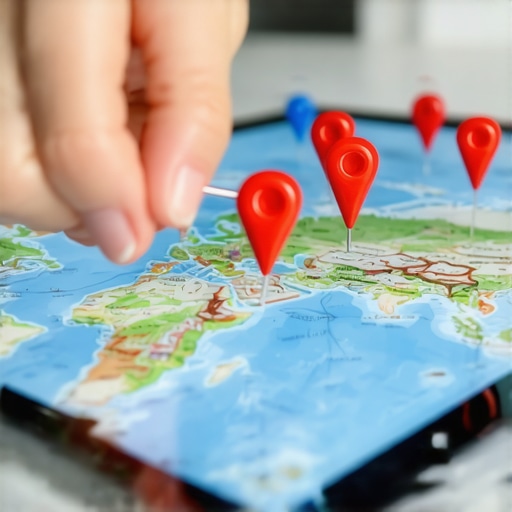
Proximity remains the strongest ranking factor in local search for service based industries and retail shops. Google prioritizes businesses within a narrow radius of the user to ensure relevance. Removing nearby fake listings reduces the competition for this limited spatial real estate and allows your legitimate profile to claim the top spot.
The physics of a three mile radius shift can be brutal. If a competitor drops three pins in a circle around your shop, they have effectively caged your visibility. You might wonder why your map position tanked after the latest local update, and often, it is because of these spatial intruders. They are not better than you. They are just closer in the eyes of the machine. I have seen rankings vanish overnight because a competitor registered a virtual office in a co-working space. Google guidelines explicitly forbid this unless the office is staffed during business hours. If you go there and the desk is empty, they are in violation. This is where how to fix the errors keeping you out of the local 3-pack starts with a walk down the street.
Local Authority Reading List
The Audit Process to Find Why Competitors Are Outranking Your GMB
Why Your Google Business Profile Was Suspended and How to Get It Back Fast
Restoring the Trust Signals Google Needs to Rank You Locally
How to Identify the Specific Errors Keeping Your GMB Ranking Low
The forensic trace of a service area polygon is another area where competitors cheat. They claim a massive territory without a physical hub. If you are struggling with a fixing the gmb suspension loop without starting over, it might be because Google is cross-referencing your claimed area against your actual transit data. The algorithm knows where your vans are. It knows where your workers are. When a competitor lies about their reach, they create a friction point in the data. You must highlight this discrepancy in your redressal report. Show Google that their reported service area overlaps with three other businesses using the same phone number. That is a footprint of a lead-gen network.
Why your physical address is a liability
Physical addresses can become liabilities if they are shared with blacklisted entities or if the location has a history of spam. Google maintains a memory of every pin dropped at a coordinate. Cleaning up the history of your location is necessary for maintaining a stable and trusted map presence.
Every building has a digital reputation. If you move into a suite that was previously used by a spammer, you are inherited their sins. I once audited a site where the business could not rank regardless of their backlinks. I found the problem. The address had been used for forty different fake locksmith listings over five years. The coordinate was poisoned. This is why you need cleaning up messy citations for businesses with multiple office locations to be your first priority. You have to scrub the history. You have to prove to Google that the new occupant is legitimate. I look at the signage. I look at the way the light hits the decals on the window. If it looks temporary, Google thinks it is temporary.
“A single verified photo of a storefront with permanent signage carries more weight in the proximity algorithm than one hundred unverified citations from non-authoritative directories.” – Proximity Logic Digest
The pin moved. I saw it happen in real time during a city-wide update. The competitors who were keyword stuffing their business names got pushed to page four. The businesses with clear, high-resolution photos of their physical interior stayed. This is behavioral zooming. Google wants to see that people actually enter the building. They use the blue dot on the user’s phone to verify that the destination was reached. If no one ever reaches a competitor’s address, the algorithm eventually realizes the destination is a ghost. You can accelerate this by reporting the lack of a physical storefront. Use the street view. If the street view shows a vacant lot where a building is claimed, that is your smoking gun.
The math of local justification triggers
Justification triggers are snippets of text like Provides or Their website mentions that appear in the map pack results. These are generated by Google’s AI when it finds a match between the user’s query and your content or reviews. Removing fake competitors ensures these triggers work for your legitimate business instead of being diluted by spam.
When a competitor uses AI to generate thousands of fake reviews, they are trying to hijack the justification triggers. They want Google to say Their website mentions residential roofing even if they have no office. This is why the exact steps to prune low-quality ai content for better local seo are vital. You must keep your data clean while reporting their mess. If you find a review pattern where twenty accounts all use the same phrasing, report the reviews and the location. It is a cluster of deception. I have seen businesses get shadowbanned after a core update because they tried to fight fire with fire. Do not do that. Stay clean. Use the lens. Capture the reality. Google is getting better at seeing through the digital filters. They want the raw, the unedited, the real. That is where the power lies. The pin will move back to you once the obstacles are cleared.