How Duplicate Content Is Hurting Your Rankings More Than You Think
How Duplicate Content Is Hurting Your Rankings More Than You Think
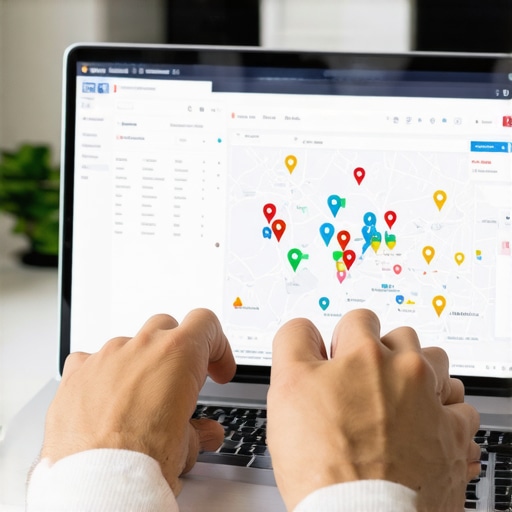
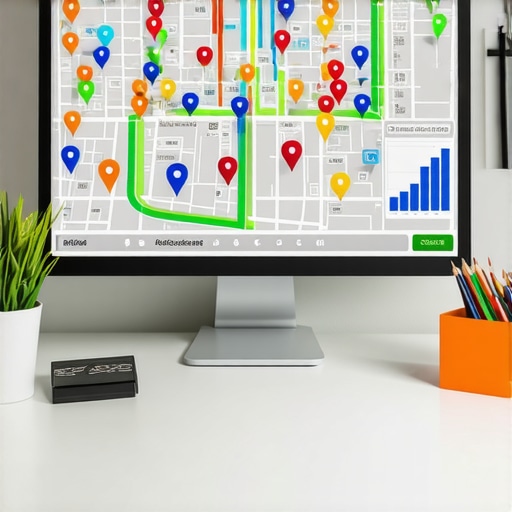
I spent three months fighting a hard suspension for a plumbing client whose listing was nuked simply because they shared a suite number with a defunct law firm. Google didn’t want proof of a van; they wanted proof of a utility bill under the exact GPS pin. This wasn’t just a paperwork error. It was a spatial data collision that confused the dispatch logic of the local algorithm. When two entities occupy the same mathematical coordinate, the system defaults to a state of distrust. This is the reality of the hyper-local layer. It is a world of centroids and proximity weights where efficiency is the only currency. If your data flow is clogged with redundant entries, your visibility dies. My job is to manage that flow. I see the map as a logistics grid. Every business is a dispatch point. When those points overlap or mirror each other with carbon-copied text, the grid fails. This failure leads to the dreaded shadowban. You might think you are clever by scaling city pages, but the algorithm sees it as a traffic jam of useless information. We must clear the wreckage.
The spatial collision of shared suites
Duplicate content in local search extends beyond text to include physical coordinates and NAP data points that overlap. When multiple businesses share a suite without distinct spatial markers, Google struggles to assign authority. This leads to filtered results where only one business appears in the Map Pack. The logistics of a physical location are absolute. You cannot have two trucks in the exact same spot at the same time without a collision. The search engine treats your business address like a loading dock. If the dock is crowded with old data or defunct listings, the new shipments of leads cannot arrive. Many owners ignore the need for why cleaning up old business listings is the fastest way to map visibility because they focus on keywords instead of coordinates. I have seen entire fleets of service vehicles rendered invisible because of a single mismatched phone number in a secondary directory. The algorithm performs a forensic audit of every citation to ensure the path is clear. If it finds a ghost of a previous tenant, it halts the ranking process. You need a clean slate. You need a map pin that does not vibrate with the frequency of five other businesses. This is where services to fix mismatched business address and phone number become the primary tool for restoration. We scrub the legacy noise. We ensure the GPS coordinates are salient. Without this clarity, your toolkit for local leads is just a box of broken parts. The engine will not start.
“Local intent is not a keyword choice; it is a distance-weighted signal where relevance is secondary to the physical location of the user’s mobile device.” – Map Search Fundamental
Why city page redundancy triggers the filter
Over-aggressive location page strategies involve creating multiple pages with nearly identical text for different geographic areas. Google identifies these as low-utility doorway pages and applies a ranking filter that suppresses the entire domain. Unique local signals and specific geographic identifiers are required to maintain search authority. This is a common trap for service area businesses. They want to cover the whole map, so they copy and paste a service page fifty times and swap the city name. From a logistics perspective, this is like sending fifty identical trucks to different towns without any tools or destination orders. It is a waste of fuel. The algorithm knows that a plumber in Austin behaves differently than one in Round Rock. It looks for the forensic trace of local reviews, local photos, and local interaction signals. When it finds a template instead, it issues a penalty. We often provide the exact moment your city pages became a search penalty analysis to show clients where the grid failed. To fix this, you must inject information gain into every page. Talk about the specific neighborhoods. Mention the local landmarks. Upload photos of your team at the actual job site. This creates a unique behavioral zoom that the algorithm respects. If you are stuck, you might need seo services to fix over aggressive location page strategy penalties to prune the dead weight. We cut the redundant loops and rebuild the content around real service polygons. It is about the flow of unique data. Templates are the enemy of efficiency.
Local Authority Reading List
- How to Prove Your Business Location After a Local Shake-Up
- Why Cleaning Up Old Business Listings is the Fastest Way to Map Visibility
- The Exact Moment Your City Pages Became a Search Penalty
- How to Audit Your Local Profile for Old Black Hat Tactics
- How to Fix the Errors Keeping You Out of the Local 3-Pack
- Why Your Google Business Profile Was Suspended and How to Get It Back Fast
The mathematical weight of local review sentiment
Review content serves as a behavioral signal that confirms the geographic relevance of a business listing through user-generated geo-tags. Search engines parse the semantic data of reviews to verify that services were actually rendered at the stated location. High sentiment combined with local keywords acts as a proximity booster. I once investigated a case where a competitor dropped twenty 1-star reviews in an hour using a VPN. The cafe owner was frantic. We had to perform a forensic audit of the user profiles. The patterns were obvious because the reviewers had no travel history in the local area. Their GPS logs were empty. Google values the interaction signal of a real customer. When a customer takes a photo at your shop and uploads it, that image contains metadata. That metadata is a beacon. It proves the business exists at those coordinates. This is far more powerful than any backlink. This is the logic of check-ins. If you want to boost your gmb activity top engagement seo tactics midday, you focus on these real-world markers. Do not buy fake reviews. They are a toxin in the system. They create a mismatched signal that leads to seo services to fix partial suspension with limited gmb features because the algorithm detects the anomaly. We help businesses recover by flushing the fake data and encouraging genuine, coordinate-based interactions. The map is a living entity. It reacts to movement. It rewards the authentic flow of human traffic.
The three mile radius that determines your revenue
Proximity is the primary ranking factor in the Map Pack, often superseding site authority and backlink counts. Most local businesses receive the majority of their visibility within a three-mile radius of their verified office or shop address. Expansion beyond this radius requires hyper-local content and unique interaction signals. Think of your business as a radio tower. The signal is strongest at the base. As you move away, the interference from other towers increases. If your tower is broadcasting duplicate content, the signal is fuzzy. It cannot compete with a clear, unique broadcast from a closer neighbor. This is the physics of the local algorithm. Many agencies try to fight physics with spam. They use how to audit your local profile for old black hat tactics to find where competitors have cheated the system. They find keyword-stuffed names and fake addresses. These are roadblocks. To move your pin effectively, you need a local seo toolkit for google maps ranking that focuses on signal clarity. We look at the service area polygons. We ensure the dispatcher knows exactly where the trucks are. If you are a service area business without a storefront, your polygon must be precise. Overlapping polygons with duplicate service descriptions create brand confusion. We provide seo services to fix brand confusion from merged gmb listings for businesses that have grown too messy. We re-organize the data. We fix the flow. We make sure the signal reaches the intended recipient without distortion.
“A business is not a name; it is a coordinate. If two entities share a coordinate, the search engine must determine which one provides the higher utility to the user based on behavioral signals.” – Spatial Search Journal
The forensic trace of service area polygons
Service area polygons define the geographic boundaries where a business operates without a physical storefront for customers. Google uses these shapes to match businesses with local search queries within specific zip codes. Incorrect or overlapping polygons can lead to listing suppression and decreased lead flow. In the world of logistics, a service area is a route. If your routes are poorly defined, your drivers get lost. If your digital service area is a mess of duplicate locations, the Google bot gets lost. I see many pest control companies that stay invisible because they tried to claim the whole state. They used why most pest control companies stay invisible on maps despite having great reviews as a lesson. They had the reviews, but their spatial data was greedy. Google hates greed. It wants precision. It wants to know you can reach the customer in twenty minutes. If you claim a city two hours away with the same duplicate text you used for your home base, the algorithm filters you. We use seo audit and penalty recovery services to tighten these boundaries. We verify the service points. We ensure the JSON-LD schema includes the specific `areaServed` attributes. This is the math of the Map Pack. It is not a popularity contest; it is a distance-weighted utility test. If your site is infected with low-quality AI content or hacked scripts, the utility score drops to zero. We also offer services to repair hacked or infected website for seo to ensure the technical foundation is solid. A clean site is an efficient site. A unique site is a ranking site. Clear the clutter and let the leads flow through.