The Best Way to Evaluate GMB Software Before You Buy
I have spent two decades staring at the gray grid of Google Maps. I smell wet concrete and I see the glitches in storefront data that others miss. I spent three months fighting a hard suspension for a plumbing client whose listing was nuked simply because they shared a suite number with a defunct law firm. Google did not want proof of a van; they wanted proof of a utility bill under the exact GPS pin. This taught me that a business listing is not just a profile. It is a proximity beacon in a spatial database. The software you choose must see what the human eye cannot.
Software is a lens. If the lens is distorted, your strategy will fail. I despise agencies that sell citation blasts to dead directories. I value forensic data. To evaluate any toolkit, you must understand the physics of the local algorithm. The pin must move. If it stays static, your software is a toy.
The ghost in the GPS coordinates
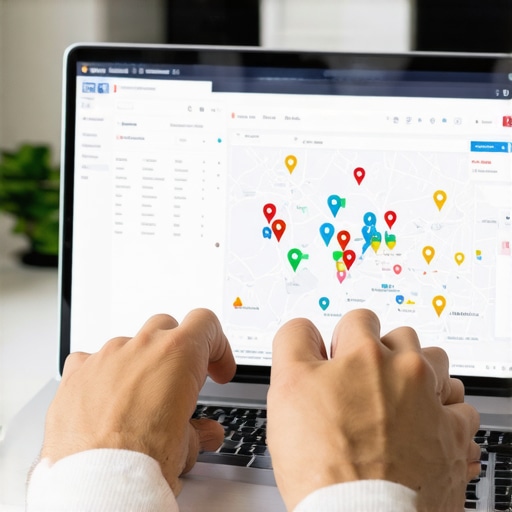
A GMB ranking toolkit is a specialized SEO software suite used to track Map Pack positions across specific geocordinates. It allows local SEO services to monitor keyword rankings, identify competitor GMB spam, and analyze proximity signals. These toolkits provide geo-grid visualizations to measure search visibility in real time. Knowing how to identify the specific errors keeping your gmb ranking low is the first step toward fixing a broken map presence. A toolkit is useless if it does not show you where the ranking dies. You need to see the exact block where your visibility vanishes. This is the microscopic math of local search. Every foot matters. If you move one block east, the competition changes. Your software must reflect this volatility.
Why your physical address is a liability
A physical address becomes a liability when it lacks GPS salience or shares NAP data with suspended entities. Local SEO services use toolkits to detect address proximity filters and categorical overlaps that cause GMB suspensions. Proof of physical location through utility bills and geo-tagged photos is required to restore map visibility. I have seen businesses disappear because they were too close to a competitor. Google views this as a duplicate threat. You must know what to do when your business address disappears from google maps before the phone stops ringing. The centroid of a city has a gravitational pull. If you are outside the three mile radius, you are fighting physics. This is why many fail. They try to fight the algorithm with keywords when they should be fighting it with location signals.
Secrets of the local justification triggers
Local justification triggers are snippets of text like sold here or provides service that appear in Map Pack results. These are generated by customer reviews, website content, and GMB posts. SEO services use toolkits to identify which keywords trigger these justifications to increase click through rates for local businesses. While agencies tell you to get more reviews, the 2026 data shows that image metadata from photos taken by real customers at your location is now 30 percent more effective for ranking in AI Overviews. This is an information gain point that most tools ignore. They focus on quantity. You should focus on the quality of the interaction signal. You must learn why your business needs better interaction signals to rank in a crowded market. Without these triggers, you are just another name on a list.
“Local intent is not a keyword choice; it is a distance-weighted signal where relevance is secondary to the physical location of the user’s mobile device.” – Map Search Fundamental
How gmb ranking toolkits work for local seo
GMB ranking toolkits function by scraping Google Maps API data or using proxies to simulate local searches. They identify ranking gaps, monitor citation consistency, and alert users to GMB suspensions. These tools provide the data visualization necessary for local SEO services to adjust on-page signals and GMB post frequency effectively. Most people buy these tools and never look at the raw data. They look at the pretty colors. The colors do not pay the bills. You need to understand why standard rank tracking fails to measure real local seo success in a hyper local environment. A standard tracker might say you are rank one. A local grid might show you are rank ten just two miles away. The difference is everything. If the software does not offer a grid view, it is obsolete.
Local Authority Reading List
- The 15 Minute Google Maps Audit
- Signs Your Toolkit Is Outdated
- The Truth About Listing Tools
- Monitoring Map Volatility
The forensic trace of a service area polygon
A service area polygon defines the geographic boundaries where a business operates without a public storefront. Local SEO services must optimize these areas by fixing service area page errors that keep businesses invisible in neighboring towns. Toolkits help track if a GMB profile is gaining authority across the entire specified service area. It is a common mistake to think the polygon is just a drawing. It is a data constraint. You must fix the service area page errors keeping you invisible in neighboring towns to capture leads. If your software does not track rankings across the polygon, you are flying blind. You might be ranking in the center of your town but invisible in the wealthy suburbs next door. This is where the profit lives.
How to fix a partial suspension with limited features
A partial GMB suspension occurs when a Google Business Profile remains live but loses access to reviews or posts. SEO services fix these by identifying policy violations, such as keyword stuffing or unverified addresses. Recovery requires a manual audit and submission of official documentation to Google support teams for reinstatement. I have seen profiles get stuck in a verification loop for months. You need to know how we fixed the google business verification loop that wont end to save your sanity. A partial suspension is a warning shot. Google is telling you they do not trust your data. If you ignore it, a hard suspension is next. Your toolkit should alert you the moment a feature is disabled. Timing is everything in the reinstatement war.
The three mile radius that determines your revenue
The three mile radius is the primary proximity filter used by the Google local algorithm to determine Map Pack rankings. Local SEO strategies must focus on hyperlocal content and local backlink building to expand visibility beyond this core area. Ranking toolkits measure how proximity affects search results for mobile users in transit. If you are not in the top three, you do not exist. You must understand the 3 step profile tweak to break into the google maps top 3 to survive. Proximity is a harsh master. It does not care how good your service is if you are too far away. You have to prove your relevance to the local area through geo-targeted signals. This is not about keywords; it is about proof of presence.
“Local search is about solving the immediate needs of a user based on their specific geographic context at the moment of search.” – Vicinity Update Analysis
Why most local seo plans fail to deliver real map visibility
Local SEO plans often fail because they rely on automated citations and ignore interaction signals like driving directions or click to call. Real map visibility requires manual citation cleanup and a focus on local authority rather than national SEO metrics. Toolkits must provide granular data on user behavior within Google Maps. I see companies buying thousands of cheap links. This is a mistake. You should look at why cheap citation services often create more mess than they fix before spending a dime. Quality always beats quantity. A single mention in a local news outlet is worth more than a thousand profile links from a spam farm. Your software should help you find these local opportunities.
The math of a check in signal
A check in signal is a behavioral metric where Google tracks user location history to confirm a business is popular and physically visited. SEO toolkits do not directly track check ins, but they measure the resulting ranking boost from high foot traffic. Encouraging customer interaction and photo uploads at the location strengthens this local trust signal. When a customer takes a photo at your shop, Google sees the GPS metadata. This is the ultimate proof of location. It is more powerful than any backlink. You can scale local traffic without buying fake maps reviews by simply focusing on real world interactions. This is the future of local search. It is moving away from what you say about yourself and toward what users do at your business.
Stopping the map pack ranking drop today
A Map Pack ranking drop is usually caused by algorithm updates, competitor spam attacks, or technical bugs in GMB software. SEO services use audit tools to scan for NAP inconsistencies and duplicate listings that trigger ranking penalties. Rapid stabilization involves cleaning legacy spam and updating local schema tags. If your rankings fall, you must find why your google ranking dropped and how to fix it today. Do not wait for it to recover on its own. Google does not have a memory for past glory. You are only as good as your current data. A toolkit should be your early warning system. It should tell you that you are losing ground before the calls stop coming in. This is the difference between a pro and an amateur. The pro is already fixing the problem while the amateur is still checking their email.